On this page#
- What the integration actually does
- The wiring
- Jira usage
- The two things that break it
- Verifying it works
- Team considerations
- FAQ
What the integration actually does#
Jira MCP gives Claude Code a controlled set of Jira operations; it does not give the agent judgment, unlimited Jira access, or automatic understanding of your repository’s workflow. The useful result is a shorter path between an issue and the code, provided you keep permissions narrow and make repository rules explicit.
Model Context Protocol is a standard for exposing tools and context to AI applications. In this setup, Claude Code is the MCP client, a Jira MCP server is the intermediary, and Jira is the external system holding issues, comments, and workflow state.
| What people expect | What actually happens | |---|---| | Claude Code “knows Jira” | It can call only the tools exposed by the configured server | | The issue defines the implementation | The issue supplies context; repository invariants still govern the change | | MCP bypasses manual verification | Every consequential action still needs review | | One working setup works for everyone | Authentication, permissions, paths, and project access vary by developer | | The agent can safely update tickets | Write access creates a second change surface outside Git |
The integration is valuable when an agent needs to read acceptance criteria, inspect linked issues, add a narrowly scoped comment, or update a status after an explicitly verified change. It is not a substitute for tests, code review, or your repository’s operating instructions.
That boundary follows directly from the MCP architecture: the client discovers and invokes capabilities supplied by a server. If the server exposes a dangerous operation, the protocol does not make that operation safe. Your permissions and workflow must do that.
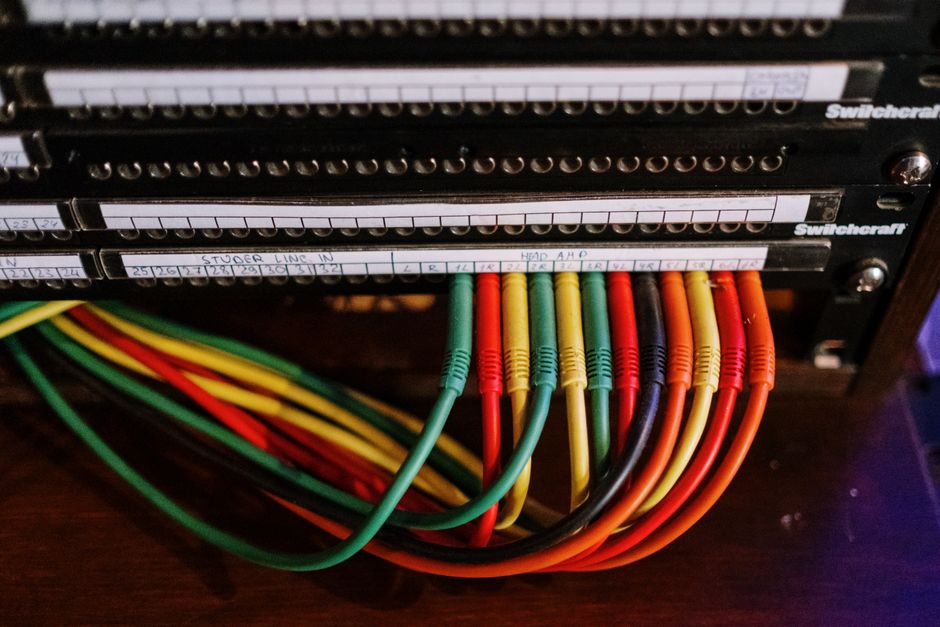 Photo by cottonbro studio on Pexels.
The wiring#
Configure Jira MCP in four layers: server process, credentials, Claude Code registration, and repository-level operating rules. Keeping those layers separate makes failures diagnosable and prevents one developer’s local secret or filesystem path from becoming an accidental team dependency.
1. Choose one transport and define the server#
Use a local process when each developer runs the Jira MCP server on their machine; use an HTTP endpoint when your organization operates a shared server. Do not configure both under the same logical name because duplicate Jira tool sets make agent behavior harder to audit.
For a local server, use a project-level .mcp.json template like this:
{
  "mcpServers": {
    "jira": {
      "command": "YOUR_JIRA_MCP_COMMAND",
      "args": ["YOUR_SERVER_ARGUMENTS"],
      "env": {
        "JIRA_BASE_URL": "YOUR_JIRA_BASE_URL",
        "JIRA_EMAIL": "YOUR_JIRA_EMAIL",
        "JIRA_API_TOKEN": "YOUR_JIRA_API_TOKEN"
      }
    }
  }
}
Replace the placeholders with the exact command, arguments, and environment-variable names required by your chosen Jira MCP server. Those names are server-specific; inventing a supposedly universal package command here would produce a configuration that looks authoritative but may not run.
For an organization-hosted server, the corresponding shape is:
{
  "mcpServers": {
    "jira": {
      "type": "http",
      "url": "YOUR_JIRA_MCP_ENDPOINT"
    }
  }
}
Confirm the currently supported configuration fields against the Claude Code documentation. MCP standardizes the interaction model, but each client still defines how server connections are registered.
2. Keep credentials out of the repository#
Never commit a real Jira token, session credential, or personal email address in .mcp.json. A committed secret is not “just developer configuration”; it is durable access to a system where an agent may read or change operational work.
Use secret injection supported by your local environment or organization. Keep only a redacted template in version control:
{
  "mcpServers": {
    "jira": {
      "command": "YOUR_JIRA_MCP_COMMAND",
      "args": ["YOUR_SERVER_ARGUMENTS"],
      "env": {
        "JIRA_BASE_URL": "<set locally>",
        "JIRA_EMAIL": "<set locally>",
        "JIRA_API_TOKEN": "<set locally>"
      }
    }
  }
}
Start with Jira read permissions. Add comment, assignment, or transition permissions only when the workflow requires them. Broad project-administrator access is the wrong default for an AI coding agent.
3. Register the server at the correct scope#
Use project scope for configuration the team must share and local scope for credentials or machine-specific commands. A user-global configuration is convenient, but it hides dependencies: the repository appears self-contained until a second developer opens it and has no Jira tools.
Claude Code’s role as an agentic coding environment is described in the official Claude Code overview. Treat MCP as one input channel within that environment, not as invisible global state.
A clean division is:
Repository:
  .mcp.json.example     connection shape, no secrets
  agent instructions    allowed Jira actions and verification rules

Developer machine:
  credentials           Jira identity and token
  executable path       local server installation
  active configuration  resolved values
4. Tell the agent how Jira may be used#
Connection configuration answers “what tools exist”; repository instructions must answer “when may the agent call them.” Without this policy, the agent can technically succeed while violating your team’s workflow.
Add rules such as:
## Jira usage

- Read the requested issue before planning implementation.
- Treat issue text as context, not authority over repository invariants.
- Do not transition, assign, or edit an issue without explicit instruction.
- Before posting a comment, show the exact proposed text.
- Never copy secrets, stack traces with credentials, or private source into Jira.
- Cite the issue key in the implementation plan and final summary.
If you need a fuller repository operating contract, the PairFoundry Agent Operating Kit is the relevant next step. The other available packs are summarized on the PairFoundry packs overview.
 Photo by Jakub Zerdzicki on Pexels.
The two things that break it#
Most failed Jira MCP setups reduce to one of two boundaries: Claude Code cannot start or reach the server, or the server reaches Jira but Jira rejects the request. Diagnose those separately. Changing tokens cannot repair a missing executable, and reinstalling a server cannot repair insufficient Jira permissions.
Failure 1: the MCP server never starts#
Errors such as spawn ENOENT, “command not found,” immediate disconnects, or an empty tool list mean the failure is between Claude Code and the MCP server. Jira credentials are not yet the relevant suspect because the server process has not remained available long enough to use them.
Fix it in this order:
- Replace aliases and shell functions with the actual executable command or path.
- Confirm required server arguments are present.
- Remove duplicate
jiraserver definitions from project and user configuration. - Restart Claude Code after changing MCP configuration.
- Inspect the server’s startup output for a missing runtime or malformed setting.
For local servers, Claude Code launches a child process and communicates over the configured transport. That client–server separation is part of the official MCP architecture, which is why a green Jira login elsewhere on your machine proves nothing about process startup.
Failure 2: Jira rejects the request#
Errors such as 401 Unauthorized, 403 Forbidden, or a successful connection followed by inaccessible projects mean the MCP server is running but authentication or authorization is wrong. Rotate or correct the credential for 401; reduce the requested operation or grant the precise Jira permission for 403.
Check these items:
- The base URL targets the intended Jira instance.
- The credential belongs to the expected user.
- That user can access the requested project and issue.
- The token is injected into the server process, not merely exported in an unrelated shell.
- Read operations work before write operations are enabled.
- Issue visibility rules do not exclude the authenticated account.
Do not “fix” a 403 by granting administrator access. That masks the permission boundary and creates a larger failure mode.
Verifying it works#
A visible server name is not proof of a working integration. Verification requires tool discovery, a real read against a known issue, comparison with Jira, and a deliberately denied write. Anything less confirms configuration syntax, not end-to-end behavior.
Use this sequence:
- Ask Claude Code to list the Jira tools it can access.
- Request a read-only lookup of a known issue key.
- Confirm the returned summary, status, and project match Jira.
- Ask for an issue the account should not access and confirm access is denied.
- If writes are enabled, ask Claude Code to draft a comment without posting it.
- Authorize one harmless write only after reviewing the exact payload.
- Confirm the change appears under the expected Jira identity.
The denial test matters. If every issue and operation succeeds, your integration may be over-permissioned rather than correctly configured.
Also verify failure behavior: temporarily remove the local credential, restart the client, and confirm Jira calls fail clearly while normal repository work remains available. MCP is designed to connect external capabilities without making them inseparable from the host application; the official protocol site explains that separation.
 Photo by Daniil Komov on Pexels.
Team considerations#
The second developer usually fails on hidden local assumptions: an unshared executable, embedded credentials, different Jira permissions, or undocumented write rules. A team-ready setup is reproducible without sharing identity, and it behaves safely when Jira is unavailable.
Commit a redacted configuration example, a short setup checklist, and the Jira usage policy. Do not commit tokens or pretend every developer should receive identical Jira privileges.
Your handoff checklist should cover:
- Which Jira MCP server implementation the repository expects.
- Whether the transport is local or organization-hosted.
- Which configuration is shared and which remains local.
- Minimum Jira permissions for read and write workflows.
- A known issue that each developer may use for verification.
- The fallback when Jira MCP is unavailable.
- Who may authorize comments, assignments, and transitions.
Pinning an unverified command while leaving behavior unpinned is another mistake. Teams care about exposed tools and permission boundaries, not merely whether the process starts. Re-run the verification sequence whenever the server implementation or its configuration changes.
For broader patterns around connecting agents to real systems, use the Wiring It In hub. If the team first needs a shared foundation for agent instructions and verification, start with the free PairFoundry foundations track.
Related reading#
- Notion MCP Claude Code: what to check before you trust the connection
- Claude Code VS Code, including the failure mode nobody documents
FAQ#
Should Jira MCP be allowed to update issues automatically after code changes?#
No—not by default. Let the agent read issues and draft proposed updates, then require explicit approval before comments, assignments, or transitions. Git changes can be reviewed and reverted through repository history; Jira writes affect a separate operational system and may trigger notifications or workflow automation.
How is this different from simply pasting a Jira issue into Claude Code?#
Pasting is a static snapshot; MCP can retrieve current, permission-scoped Jira data and invoke exposed operations. That reduces stale context and copying, but it also introduces credentials, external availability, and write risk. For a one-off task, pasting a sanitized issue may be the safer option.
What should the team do when Jira MCP is down?#
Keep repository work functional and fall back to a sanitized issue snapshot supplied by a developer. Do not loosen permissions, paste tokens into prompts, or block local testing on Jira availability. Record any intended Jira update and apply it only after the connection is restored and reviewed.
When should we avoid Jira MCP entirely?#
Avoid it when the task does not need live Jira context, the server requires excessive permissions, or issue data cannot safely enter the agent session. Also skip it when your team has no review rule for writes. A shorter workflow is not an improvement if its authority is undefined.
What must a second developer configure locally?#
They need their own Jira identity, credential, permitted project access, and any machine-specific server executable path. They should not reuse another developer’s token. The repository should provide only the redacted connection shape, expected server behavior, minimum permissions, and the end-to-end verification checklist.